
In praise of things that go wrong.
When it comes to our annual trips to India, there are a few questions people tend to ask me and/or Janine and Jaya, my travel companions and former roommates back at University of Chicago.
- “Could I come with you next time?” (Answer: “We only allow people who saw us in our underwear 50 years ago.”)
- “Aren’t you worried about _____ ?”[Fill in the blank with germs/ dirt/ sickness/ theft/ injury/ drinking the water/ eating the food/ death] (Answer: I took three dips in the Ganges River and all that happened is my bum knee has mysteriously gotten much better.)
- “Why do you go during the dead of winter?” (Answer:
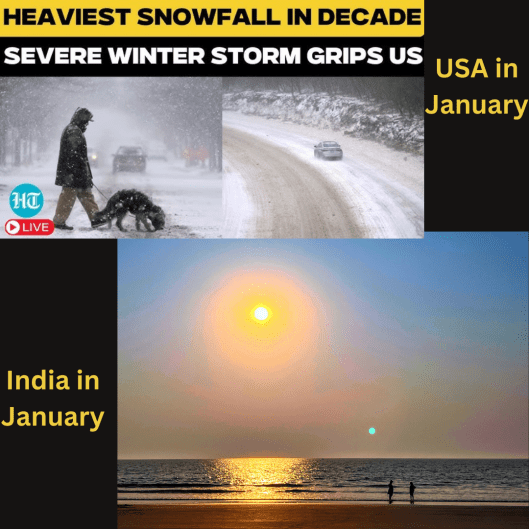
If you don’t mind that green alien spaceship clearly about to land in the Arabian Sea, the coast of India has some of the warmest, most stunning beaches in the world.
The truth is that what keeps us going back (or at least what we remember most about our trips) are not the things that go right. It’s the things that go spectacularly, gloriously wrong that make the best stories and most lasting memories.
Take this year’s trip. Janine’s plane took off just as the USA was plunging into record-breaking deep freeze. Just days before takeoff, I noticed that my own tickets had mysteriously been issued in my maiden name (which I haven’t used in over 45 years). I threw myself on the mercy of the travel booking site, explaining that it was a matter of life or death (mostly because Jaya would probably kill me if I screwed up her meticulous travel plans). I had to resurrect my marriage certificate but somehow they managed to reissue the tickets in the nick of time.
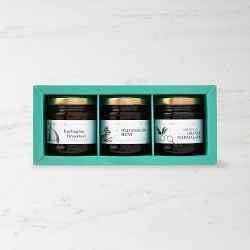
At Mumbai Airport at 2AM, security flagged a little package containing the three tiny bottles of marmalade I was bringing to Jaya as a gift. Each one was clearly labeled as 100ml, the limit for air travel. Ignoring the other passengers piling their jugs of water, soft drinks, coffee, and IDK automatic weapons onto the x-ray belt, the guard unwrapped each little jar of marmalade, holding it to the light and squinting at it.
“Marmalade,” I explained.
He shot me a suspicious look.
I tried again. “For toast?”
He started to unscrew the jar.
“It’s like jam! Yum!” At this point, I was willing to abandon Jaya’s gift, but the bag also held my winter coat. Which, sadly, I would probably need for my return journey to the frozen northlands.
The guard held it out to his colleague. “Jam?”
The other guard shrugged and gave one of those yes/no headshakes at which Indian men excel. They handed over my bag, and we ran to meet up with Jaya and board our flight to Goa and paradise.
Even though it was just before dawn, our taxi ride to the hotel seemed odd. In India, car horns are usually a cheerful sonar system, announcing each vehicle’s presence and direction at all times. Colorfully painted trucks even include signs reminding other drivers to “sound horn”. But these highways were crazy silent. Cars obeyed traffic rules, and stayed on their assigned sides of the road. We passed imposing Catholic churches and other reminders of almost 500 years of Portuguese occupation. The loud, boisterous India we were used to had been replaced by sedate drivers and churches that would have been at home anywhere in Europe.
“Jaya,” I whispered. “Where are we really?”
At our hotel, we collapsed into jetlag comas following almost two full days of travel. When we regained consciousness, we lost no time in heading over to the beach and standing, stunned, in the warm waves as the sun set.
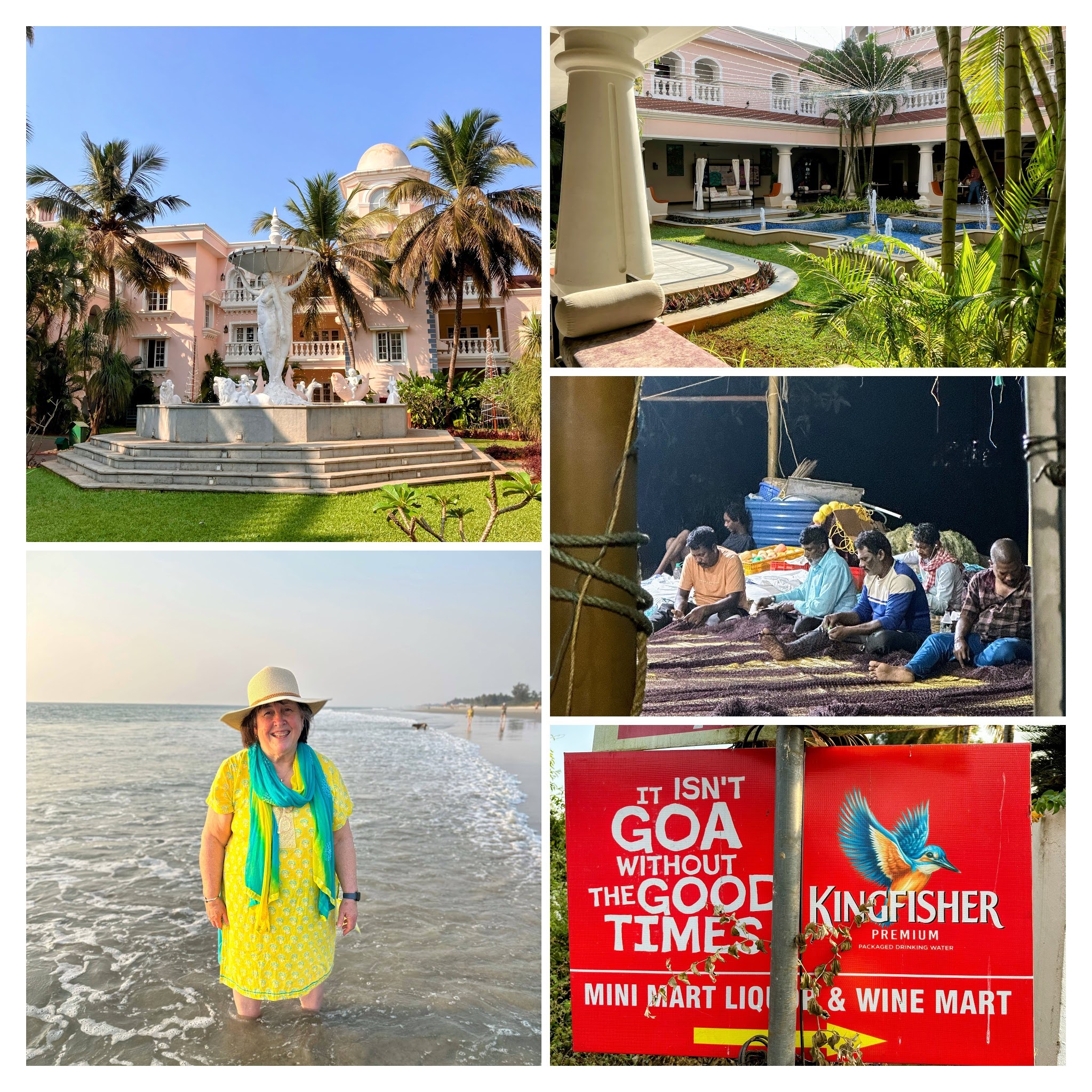
Even though Emerald Palms, our hotel in Goa, was fogging the lobby in clouds of mosquito repellent so dense we had to wrap our scarves around our faces and run through, gagging and choking, we were still impressed by the oddly European feel of the old resort. [image credit: unless otherwise noted, all images are ©Janine Smith and Jaya Ayyer, 2026]
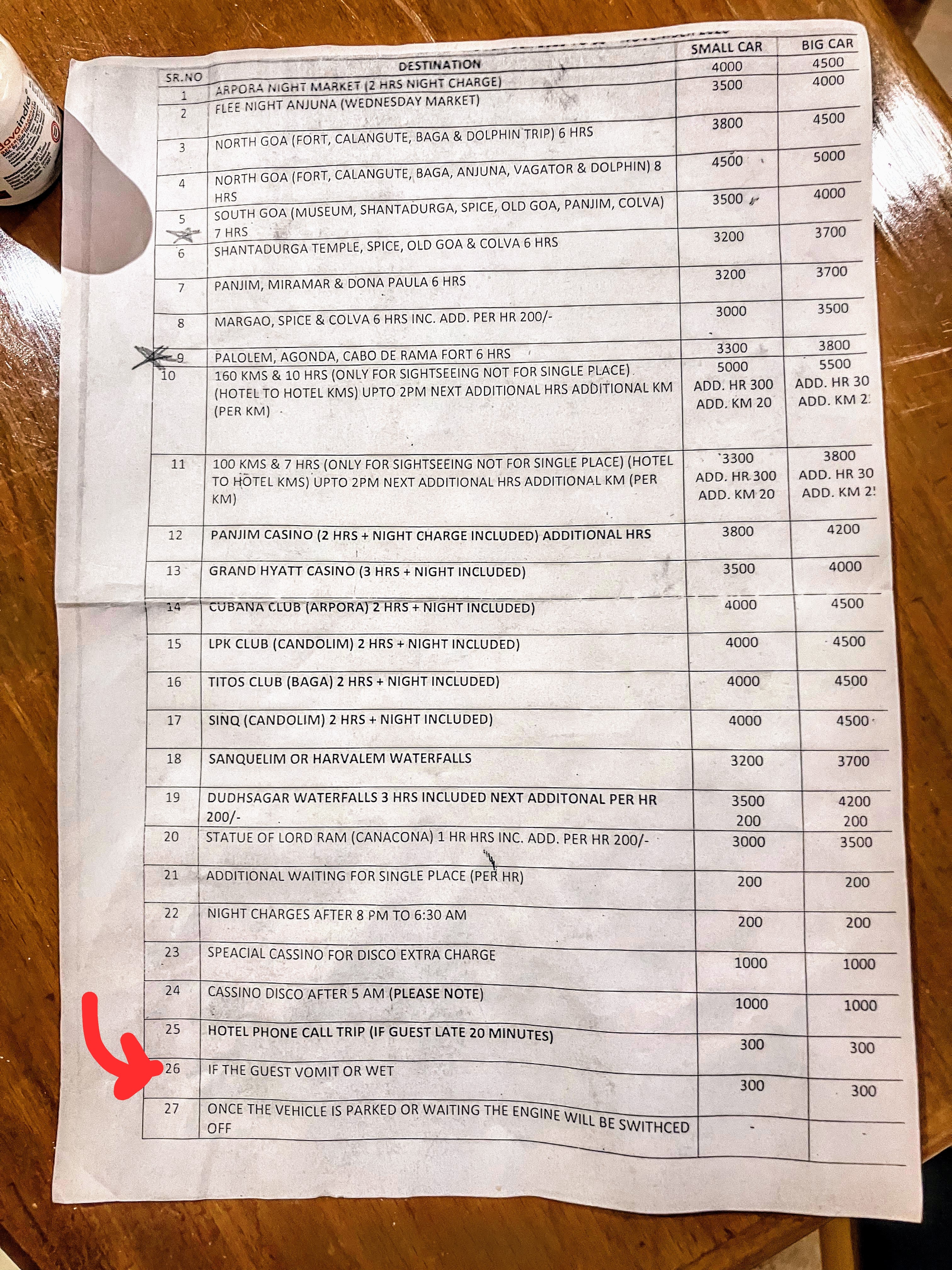
The hotel receptionist gave us a taxi menu, so we began planning our next day. First we had to choose a set package, one which would not involve #26, a ₹300 extra charge “If the guest vomit or wet.”
Our driver suggested that we would not want to miss an “art museum” of special interest. Even though we were pretty sure the special interest was whatever cut the driver got from bringing customers there, it was the first morning of our trip and we were willing to take a chance. And that’s when things started to go wrong.
Do you ever wonder who buys all those old broken tools and appliances you see in garage sales and junk shops? In Goa, at least, it’s the Victor Hugo Gomes Chitra Goa Museum. Our museum-assigned guide walked us through the artifacts collected and loosely arranged (a bunch of old typewriters she described as “typewriters”). This went on for several rooms, with no particular reasoning (although there were, randomly, some well-done exhibits with photos and explanations). Other museum visitors joined our little group, including an older lady who attached herself to me, although we couldn’t tell if she thought I was pathetic or just hilarious. At one point, when the guide was pointing to old kitchen equipment, the lady confided, “I have a lot of these things in my kitchen. Does that mean I belong in a museum?” I had to agree with her, and admit that many of the artifacts on display were younger than I was.
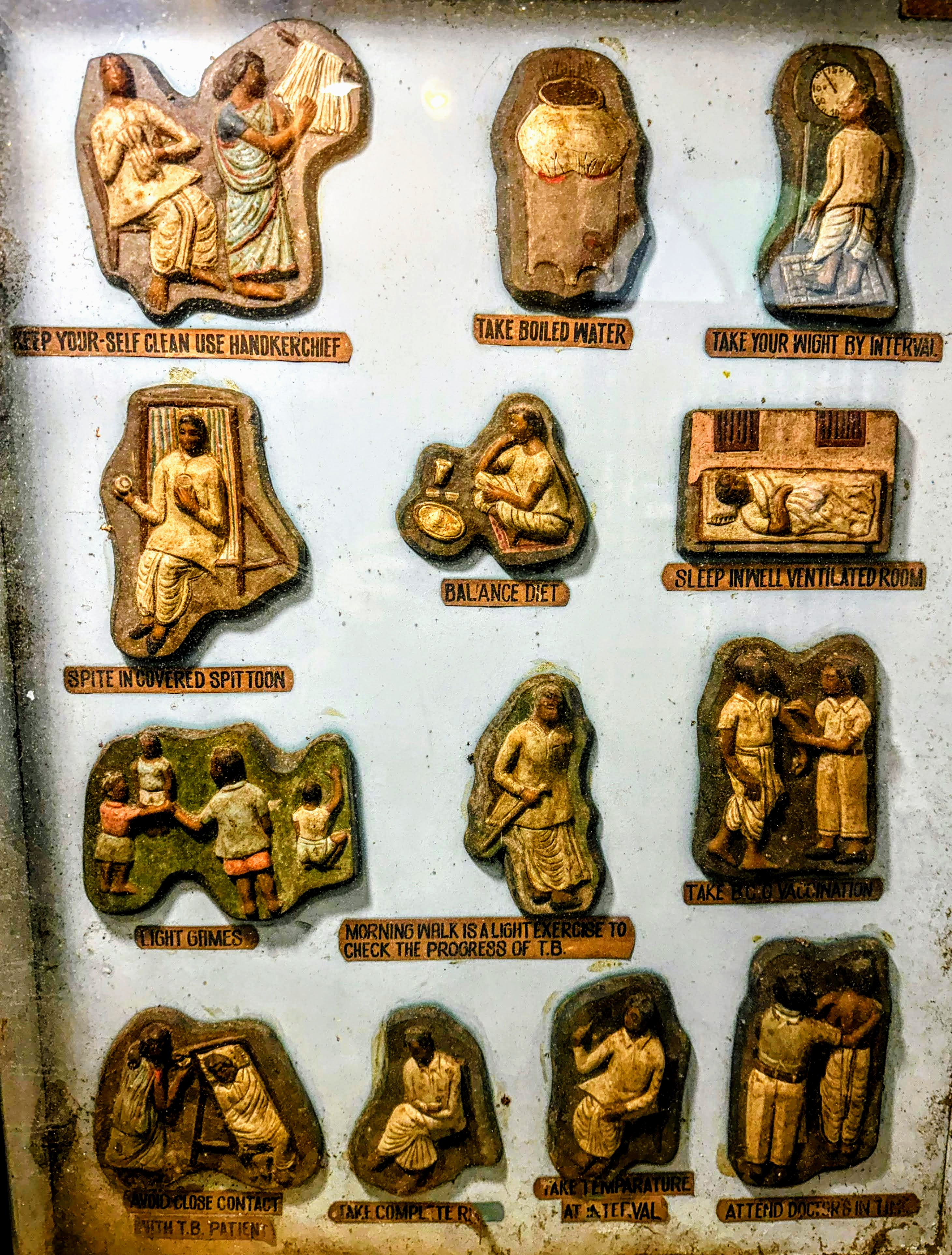
I found the museum’s DIY tuberculosis treatment plaque strangely charming.
But the real problem was that with each passing minute, we risked missing the actual objective of the morning’s trip because we knew the temple we wanted to visit would be closing mid-day. Finally released by our friendly guide, we were on the way to the Shantadurga Temple in Goa. The original temple was destroyed during the Portuguese occupation, rebuilt during the early 1700s, and dedicated to Shantadurga, goddess of peace.
We were surprised to see crowds of people dressed in their festive best. Not sure where to go, we followed one group through a doorway, and found ourselves in the front of the sanctum. We realized we had somehow bypassed a huge queue of people waiting to enter. We were about to leave when a kind man in a beautiful green silk kurta murmured to me that it was a special moment. He pointed to the golden chariot, and said that the deity would make an appearance which hadn’t occurred for a hundred years. Our late arrival and backdoor entrance had positioned us with front row views of this rare event.
Photos were not allowed, so I ask you to picture a happy crowd dressed in bright silk and embroidered traditional dress, singing and praying. Priests carried dishes of open flames among them, and people waved their hands through the flames, wafting the smoke to themselves. Musicians were playing, drums and bells sounding. The idol, gorgeously draped in fresh flowers, was carried out and installed in her famous gold chariot, which was then lifted by those chosen for this special honor.
And we were right there. If we hadn’t made the two wrong decisions to stop at the museum and then to go in the wrong door, we would have missed a once in a lifetime experience.
And we still have the marmalade.
Discover more from Barb Taub
Subscribe to get the latest posts sent to your email.
 Barb Taub
As ever Barb … wonderful!! 😊
LikeLike
I would not have expected any less from you as the beginning of another wonderful trip/adventure, or I would have thought you to be an imposter. I especially love the museum with the broken tools and stuff you have in your kitchen, the 3 no-brainer questions at the beginning of your post, and the accidental front row view of the once in a lifetime appearance, you three are like a trio of forest gumps on vacation in India.
LikeLiked by 2 people
Thanks, Beth! We are, as usual, convinced that this is our best trip ever.
LikeLiked by 1 person
I love how you turn all these unfortunate events into great memories. Goa is a place I have always wanted to visit. I look forward to more about this trip. Enjoy!!
LikeLiked by 1 person
I’ve heard about these beaches for years, but nothing prepared me for them being absolute paradise. I hope you get to experience it for yourself. My recommendation is to do it while everyone at home is in the deep freeze.
LikeLiked by 1 person
Love the picture of you in the water. I would have spent the day there. But as usual, your post provided great amusement and the typical barb Taub experience!
LikeLiked by 1 person
I’m not kidding – water temp at Goa beaches today was 81∘F (27∘𝐶 -28∘C). It took an act of superhuman strength to step away.
LikeLiked by 3 people
Mayhem and magic in one chaotic and serendipitous parcel! I do really envy you and your friends on these trips. It is wet and windy in Wales at the moment and at 1* C considerably chillier than your Goan beaches. Enjoy!
LikeLike
That was definitely an event of a lifetime. Clearly you were meant to be there! Good thing the jam made it, too.
LikeLike
OMG, I‘m (still) on a bloggers‘ hiatus but I HAD to come back only to read your adventures – and may I say, I am SO NOT disappointed!
Your post made me break out in hilarious laughter and it made HH (Hero Husband) raise his eyebrows up to his ever growing hairless Temple of Intelligence….
I too have, in my later life, decided to think twice before throwing myself into mindless, idiotic, dangerous experiences – and sometimes I succeed staying alive instead of getting hurt.
I won’t ever travel to India but I fully subscribe to your ‘girls outings’ once a year – and I especially thank you for letting us participate in your disastrous but eventually totally RIGHT adventures. I love every single word you’re writing. I wish you wholeheartedly a happy continuation and send you warmest greetings – to you and your ‘sisters in crime’. Hugs from Switzerland to India, Kiki
LikeLiked by 1 person
We think of every year we can still do our India adventures as a gift.
LikeLiked by 1 person