The Romance Novel: Cliche or Trope?
The difference between a cliché and a trope is that tropes still work. Let’s say you just want to read a good, old-fashioned romance. The trope boils it down:
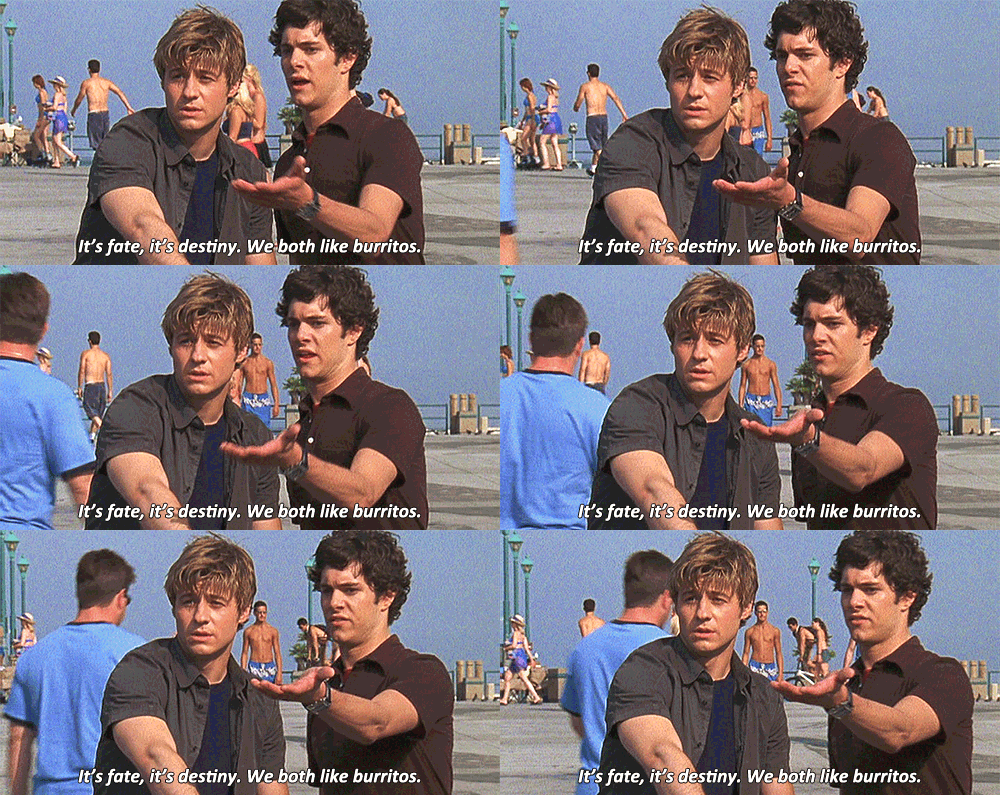
1. Boy and Girl meet cute. If this is YA, he’s a bad boy. If it’s paranormal, he’s a bad boy who is hungry. If it’s erotica, his bad boy is the biggest.
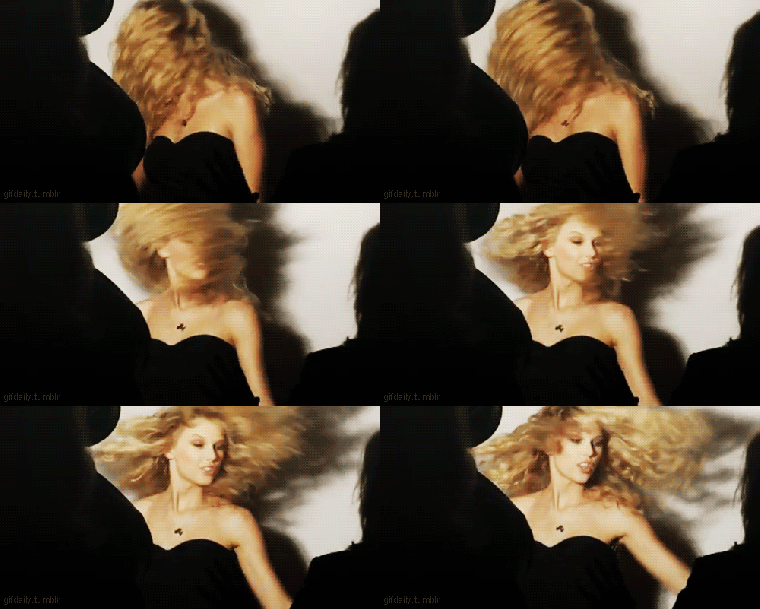
2. Girl has an Issue (or maybe a Goal). She’s worried (you can tell by the way she flicks her hair).

3. Boy has a Goal (or maybe an Issue). He’s angry (you can tell by the way he ties his long hair back, which really annoys her because she wants it to be left loose so she can run her fingers through it. Not that she would. Because she’s got a…you know. Issue. Yeah, that’s it.).
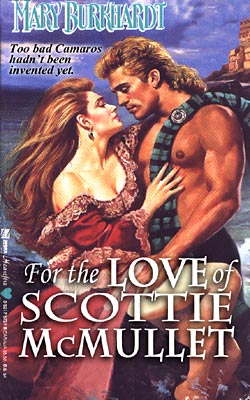
5. By page 59, chests will be involved. If this is YA, they will have a Moment. If it’s adult, they’ll share a smoldering kiss. If it’s erotica, one or both will be tied up.
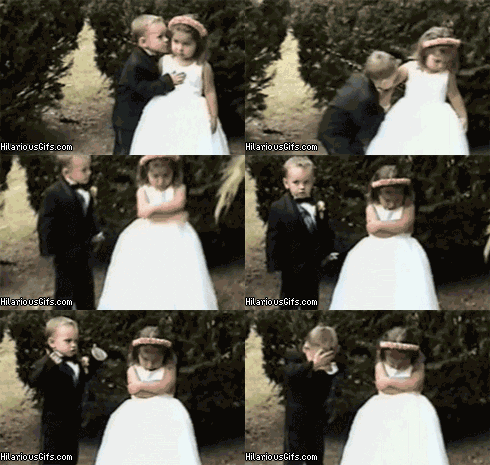
6. Because of their Obstacle, Girl rebuffs Boy. If this is YA, she won’t kiss him again. [You can take it from there…]

7. Boy gives up and watches sports with his buds. Girl eats Ben & Jerry’s with her besties.
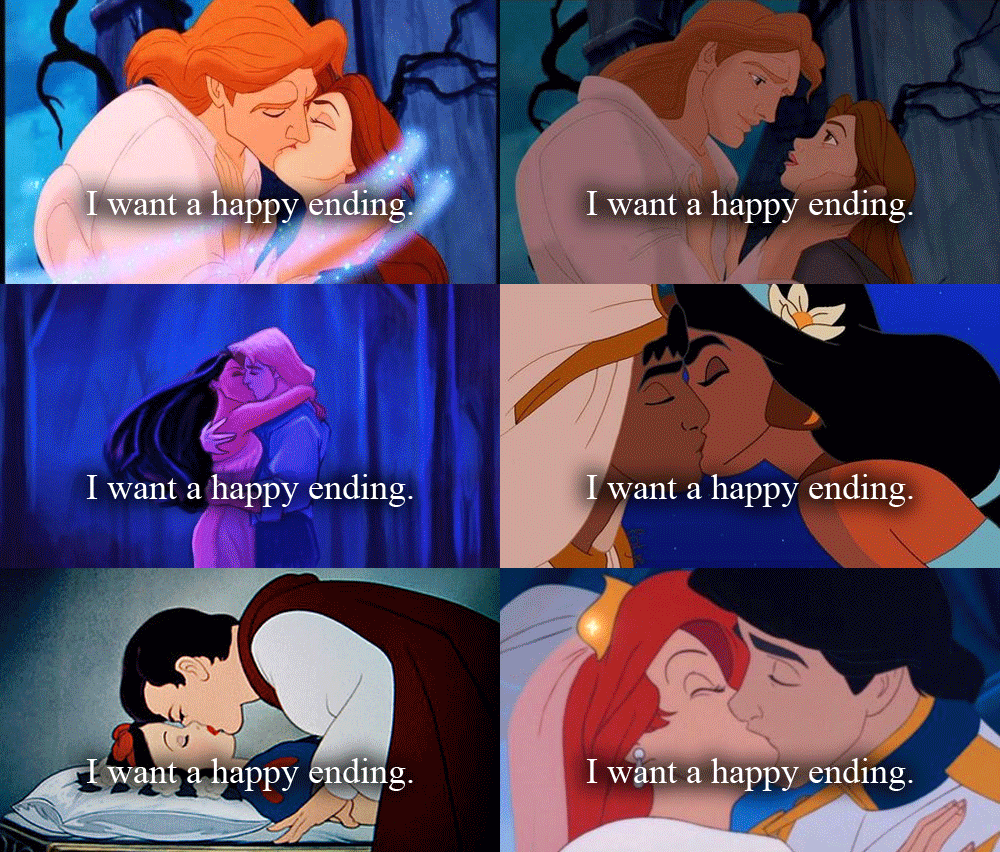
8. Girl and Boy realize they can overcome their Obstacle. They have sex (or, if this is Inspirational, a wedding. If it’s a paranormal, they have a bite. If it’s erotica, they pretty much keep on doing whatever they’ve been doing since page 59.) And they live HEA or at least HFN.
And the best part is this actually works. Through countless iterations, substitutions, shades, and the occasional vampire, romance stories are fun, satisfying, and endlessly varied.
For example…
From Here to Nashville by Julie Stock
 From Here to Nashville is a contemporary romance novel with a country music theme.
Can Music Really Bring People Together?
Rachel Hardy dreams of being a successful country music singer in Nashville’s Music City, four thousand miles away from her lonely life in Dorset.
When Jackson Phillips, an independent record label owner, encourages her band to audition for a nationwide ‘Open Mic’ competition, she decides they have nothing to lose.
But when she starts to fall in love with Jackson, the stakes suddenly get higher and she finds herself with a great big dilemma on her hands. Should she abandon her dream and take the easy way out or should she leave the life she has always known behind and take a gamble on a man who has personal demons of his own?
Follow Rachel and Jackson as they learn to trust in love again and to see whether music really can bring them together.
 My Review: 3 stars out of 5

In her debut novel, From Here To Nashville, Julie Stock checks off all the romance novel tropes. Her heroine, Rachel Hardy, dreams of success in Nashville as a country music star. She just has a couple of little problems. First of all, there’s the accent. For some reason, the country music world just hasn’t attracted that many stars from coastal cities in England. Then there are her abandonment issues. But, with backup from her childhood friends, Rachel writes and performs her own songs at neighborhood pubs and gigs. As we meet her, she is singing and looks up to meet the eyes of hot American, Jackson Phillips. When he tells her he’s from Nashville, Rachel takes it as a good sign that her dreams will come true. But Rachel is still reeling from the loss of her parents and disappearing fiancé, while Jackson is hiding secrets of his own. There are more half-steps forward and back than a Texas two-step as the couple try to advance her career and their relationship.

Julie Stock is an author of contemporary romance novels, novellas and short stories. She is a member of the Romantic Novelists’ Association’s New Writers’ Scheme and an Associate Member of The Alliance of Independent Authors.
When she is not writing, she works part-time as a teacher. She is married with two teenage daughters and lives with her family in Bedfordshire in the UK.
Reading From Here to Nashville was like eating comfort food—it’s easy to digest, feels familiar, and fills you up. You know going into it what you’re looking for, and Julie Stock competently delivers just that. The steady pace and predictable plot didn’t get in the way of the resolution. Rachel and Jackson’s alternating points of view were telegraphed in bold font, which was helpful, especially because I thought both could have used a more individual voice, not to mention richer use of colloquial expressions and speech patterns. Jackson, especially, would have benefited from an edit with a more authentic drawl and fewer Brit-speak slips (his living room is a “lounge”, he cleans by “having a tidy up”, sleeps late with a “lie in”, refers to a degree program as “on my course”, late night partying leaves him “shattered”, etc.). But overall, the writing was well-edited and clear.
The settings in the beginning of the novel were lovely and believable. I could picture the small British seaside town, Rachel’s cottage, and her life there. But when the action moved to Nashville, it lost me. I haven’t spent much time there, but I didn’t recognize the almost sterile portrait of a place I found full of eccentric characters and colorful locations.
I do have some small complaints that didn’t really get in the way of enjoying the story. For example, I wish there had been more explanation of how a Dorset girl came to be a country singer, even if it’s only the Taylor Swift/country princess variety and not LeAnn Rimes/Coyote Ugly. We never got a convincing picture of the Nashville music scene, which would have been fun.
My biggest complaint, though, is that I found myself wanting to tell both Rachel and Jackson get over yourself. He’s apparently the insanely wealthy young head of his own music label, but he takes almost no CEO-type actions, and defers to his secretary as his “office mom”. She’s supposed to be incredibly talented, but we have no idea where her training and background comes from. He’s rich and handsome, she’s beautiful and gifted. I know those people have problems too, but it’s hard to make myself care deeply when each one is just keeping secrets and expecting the other to hurt their feelings.
Overall, I’d call From Here to Nashville a solid three-star debut effort. Julie Stock has a firm hand on her characters and plot arc, and a nice way of turning a phrase. I think if she takes a few chances, stretches some of those tropes to their limits, and pushes her characters harder, her next book will be irresistible. I, for one, would like to find out.
 I reviewed From Here to Nashville for Rosie’s Book Review Team.
*I received this book for free from the publisher or author in exchange for an honest review. This does not affect my opinion of the book or the content of my review.
Book Title: From Here to Nashville
Author: Julie Stock
Genre: Contemporary Romance
Length: 320 pages
Release Date: 16 February, 2015
Contact and Buy Links:
Amazon (US) | Amazon (UK) | Goodreads
Discover more from Barb Taub
Subscribe to get the latest posts sent to your email.
 Barb Taub
..so just jump to page 59 …
LikeLiked by 1 person
Bwahahaha! Still snorting…
And do you read the last page of the mystery first too?
LikeLiked by 1 person
The credits.
LikeLiked by 1 person
No fair. I spit out my coffee on that one…
LikeLiked by 1 person
Thanks Barb, love all your plot definitions too.
LikeLiked by 1 person
Thanks, Rosie! They were a lot of fun to write.
LikeLike
Hi Barb – ah, again you found the same about a book as me. I thought Jackson was lovely, but he didn’t come across to me as the young head of a multi-million dollar recording company, who would have had Carrie Underwood wannabes coming out of his ears! Having a certain familiarity the music industry as I do, I never ‘felt’ it. On a good side, you agreed with me that the ‘feel’ of the sleepy seaside town was all there, and Julie did the romance stuff and structure very well.
Adored your illustrations!!!
LikeLiked by 1 person
Thanks so much Terry! I don’t let myself read other reviews until I finish my own, but just went back and looked at your review. Great minds and all that… I still think Julie is a writer to watch. I’m betting her next book will be terrific.
LikeLike
I think romance must be the hardest book to write well. Romance means so many different things to each reader, and somehow romantic books have evolved into something farcical. I’m finding the best romances are the ones that are included in another genre, like thrillers and mysteries.
Or historical romances. Any suggestions for a good historical romance? Anyone?
LikeLiked by 1 person
It’s kind of a reverse of a historical, but I’ve been loving Terry Tyler’s updated take on Henry VIII — first KINGS AND QUEENS, then LAST CHILD. It still astonishes me that she changes voice for each character so convincingly. Not sure you could precisely call it “romance”, although plenty of that is included.
LikeLike
Well, thank you very much! :)
LikeLiked by 1 person
Well said. I like the trope vs. cliche angle. Writing romance just gets more and more difficult. I’m gonna write a mystery next. With tropes:) I do wish Julie well, though!
LikeLiked by 1 person
Ha! I think you should do a trope-breakdown for mysteries. So fun!
LikeLike
As always Barb you manage to come up with the most amazing and original review and I loved the breakdown of the cliché v trope – excellent!!
LikeLiked by 1 person
Thanks, Georgia! I know there is a lot of debate about romance as a valid genre vs a formula, but I don’t see how that’s any more restrictive than writing a haiku. At the end of the day, cliche’s are tired but tropes are still valid.
LikeLike
Since I’m not a huge fan of straight romance or country music, this probably wouldn’t be the book for me but I loved your description of the Rom trope. I remember reading a few historical romances by a best selling author who always put her first big sex scene one third of the way into the story. Every time. You could pick up any one of hers, check the total page count, go to the 1/3 mark and you’d be within a couple pages either way.
LikeLiked by 1 person
I love it! Apparently, that writer believes if it ain’t broke, don’t fix it. And you can’t argue with success. (Sorry…I have to go add a sex scene a third of the way into my WIP.)
LikeLike
Hmm. Just had a thought. I wonder how she knew where the one-third point would be while she was still writing?
LikeLiked by 1 person
As a total pantser, I can’t speak from experience, but I hear there’s this thing called an outline… [shudders] Presumably, that author divides her’s into thirds?
LikeLike